































Storage containers are among the most practical and adaptable solutions for modern storage needs.
In 2025, these units will not only be used by homeowners but also by construction teams, retailers, and logistics companies because of their durability, protection, and mobility.
These units are made with protection and demand in mind, which is why they are made from high-grade steel so they can withstand harsh weather, heavy use, and are versatile and spacious enough to fulfill long-term storage demands.
The Versatility of Modern Containers
Beyond traditional storage, containers today are more versatile than they have ever been and are modified to serve every need, purpose, and demand.
Many companies convert them into backup, others use them as mobile offices, pop-up shops, refrigerated units, and, most commonly, as long-term secure storage solutions.
What Determines the Cost of a Storage Container?
The cost of storage containers are mainly determined by many factors, and understanding them will help ensure you make a smart, cost-effective choice.
Container Size and Dimensions
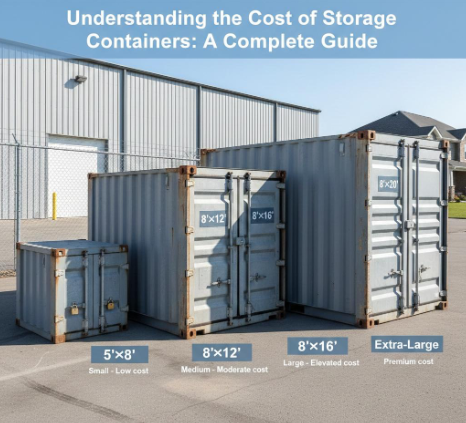
The size of a container is one of the most significant cost factors. Standard lengths usually include 10 feet, 20 feet, and 40 feet.
A 10-foot container is the most compact and suits personal storage or small tools, while a 20-foot unit is ideal for most households, construction jobs, and small businesses.
The 40-foot container offers the largest amount of space and is commonly used for high-volume storage or shipping.
As the size increases, so does the price, especially when transportation and delivery are considered.
Condition: New, Used, or As-Is
The condition of a container greatly impacts the price. New or one-trip containers are in pristine condition, with minimal signs of use and maximum structural reliability.
Used containers come in different grades, ranging from premium condition with minor cosmetic wear to heavily worn, as-is units that may need repairs.
Buyers often find that used containers provide the best value, especially if cosmetic imperfections are not a concern.
The Type of Container You Choose
Different types of containers come with different pricing levels. Standard dry containers are the most common and affordable.
High-cube containers offer additional height and therefore cost slightly more. Open-top, flat-rack, and custom-built containers fall on the high-level end of the price range due to their specialized construction.
Location and Delivery Requirements
Your geographic location plays an important role in determining cost. Coastal regions and cities near major ports generally have more inventory available and therefore lower base prices.
In contrast, landlocked or remote areas may face higher premiums due to transport logistics. Delivery fees also vary based on the distance, accessibility of the site, and the equipment required to position the container.
Modifications and Custom Add-Ons
Customizing a container can quickly increase the price. Many customers choose to add features such as extra doors, roll-up openings, insulation, electrical systems, windows, ventilation, and interior shelving.
These modifications can transform a basic container into a usable workspace or climate-controlled environment, but each addition raises the overall cost. In some cases, modifications can add 20-30% to the base price.
Market Conditions and Economic Factors
Global economic trends influence container pricing. Steel costs, shipping demand, inflation, and seasonal fluctuations all affect availability and prices.
In recent years, shifts in the global supply chain have led to container prices fluctuating more than ever before.
Although the market has stabilized somewhat, container pricing still reflects global supply and economic conditions.
Typical Storage Container Prices in 2025
What are the factors that affect storage container pricing? While prices vary across regions and suppliers, common ranges help establish realistic expectations. A used 10-foot container often costs under $1,000.
A standard used 20-foot container typically ranges from $2,500 to $4,000, while a used 40-foot container usually falls between $4,000 and $7,000.
New containers generally start at around $5,000 and can reach $7,000 or more, depending on the supplier and region. Refrigerated containers, because of their cooling systems, can cost between $10,000 and $20,000.
Should You Buy or Rent a Storage Container?
Whether you choose rental vs buying containers, it usually depends on your long-term needs, timeline, and budget.
When Buying Is the Best Option
Buying a container is ideal for individuals or businesses that require long-term or permanent storage.
It allows full control over modifications, paint, internal structure, and placement.
Ownership also means eliminating ongoing rental fees, which makes it cost-effective for extended use.
For businesses that frequently move between job sites, buying also provides convenience and continuity.
When Renting Makes More Sense
Renting is a practical solution for temporary needs such as construction projects, seasonal inventory overflow, relocations, or renovations.
It offers a lower upfront cost and flexibility, especially if you are unsure how long the storage will be needed.
Rental companies often handle delivery, pickup, and maintenance, which simplifies the process for short-term users.
Choosing the Right Storage Container Supplier
Choosing the right supplier is as essential as the container itself. A reputable supplier offers high-quality units, transparent pricing, and reliable delivery.
While selecting the storage, you should look for the provider who has a good reputation, a wide range of inventory, and also a willingness to answer questions. By being transparent about pricing, condition, and delivery timelines, you can make the whole process much smoother.
Final Thoughts
Storage containers continue to be the most flexible, durable, and cost-effective storage solution. By understanding the pricing, size, condition, type, location, and other possible modifications, you can successfully make an informed decision, whether you plan to buy it or rent it.