




























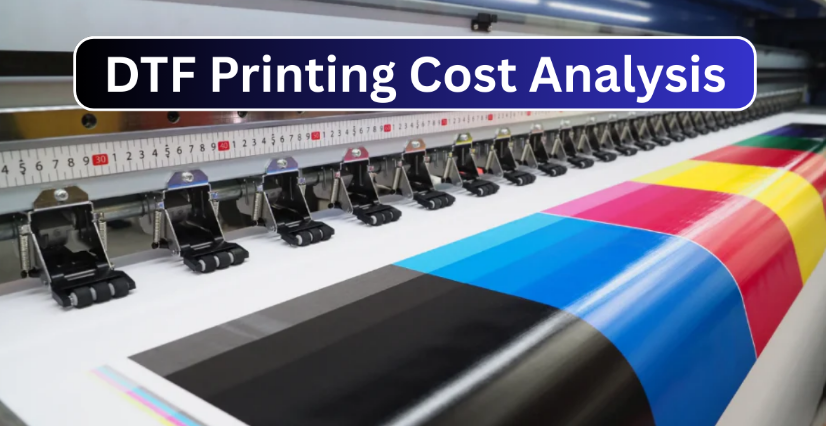
DTF printing is a method in which designs are printed on special film and transferred to fabric using heat. It works on many types of materials and creates sharp, colorful results. A DTF printer makes this whole process easy and beginner-friendly.
If you’ve been curious about why the cost of printing varies from design to design, you’re in good company. The cost breakdown is bewildering to many people when they first look at it. “Is it me or is it normal to ask, ‘What am I really paying for?’”
With this guide, you’ll know what to expect for the cost. You will learn what influences the costs, the roles of materials and time, and what you can expect when you start your own system. Having these items in mind clearly will help you make more informed decisions and enable you to manage your printing costs with confidence.
What Is DTF Printing
DTF Printing is a method in which designs are printed onto special film sheets and then transferred to fabric using a heat press. It works on cotton, polyester, blends, and almost any other material, making it very popular with small businesses. The process is clean, fast, and delivers sharp print quality even on detailed artwork.
Unlike older methods like screen printing, you don’t need multiple screens or heavy preparation. You simply print on the film, apply powder, cure it, and then press it on your garment. People love it because it’s flexible, beginner-friendly, and excellent for printing on custom apparel.
Main Costs of DTF Printing
DTF printing has a few major costs that every company needs to be aware of. The first large expense is the machinery. A DTF printer ranges from $1,500 to $10,000 dollars depending on the size and quality. You need a heat press, a curing oven, and a powder shaker, which can run you $800 to $3,000. Maintenance and replacement parts cost more to the total as well.
The second cost is consumables. DTF film sheets are generally priced at $0.20 to $0.40 per sheet, and DTF inks are priced at $50 to $120 per liter. Adhesive powder is priced between $10 and $25 per kg, and there is an additional cost for cleaning agents. Your monthly budget will go up, too, for electricity and for workspace. When you add up these costs, it gives you a good sense of how much you need to run a DTF printing setup.
Material Costs
Material cost includes the film sheets, hot melt powder, and fabric type. The quality of DTF film is very good because high-quality film has clear details and smooth transfers. Low-quality film may save money in the short term, but cause problems such as cracking or poor adhesion.
You also need cleaning solutions, which will cost between $5 and $15, and you will want to get some spare film rolls or sheets as well. Maintenance kits vary from $20 to $60, depending on what you need. There’s electricity, and there’s the storm of little monthly costs for basic supplies for your workspace. Adding all those materials up, you should then have a pretty good sense of what your actual printing cost is per job.
Machine and Equipment Costs
DTF printers, heat presses, and curing machines contribute to your overall costs. Good printers are consistent in print quality and waste less material, which means savings over time. If you invest in cheaper equipment, you may face print defects that increase reprints and material loss.
You might need some extra tools such as cleaning kits, spare printheads, or temperature controllers. These little things add up and can range from $20 to $200, depending on your setup. The equipment also consumes electric power, which adds to your monthly expenses. When you add it all up, the cost of the machinery and equipment is a significant part of your total DTF printing budget.
Labor and Time Costs
The cost of labor and time is a real part of DTF printing. If you employ an operator, the salary will be somewhere about $8 to $20 an hour, depending on the skill level and the country. Even if you are working by yourself, your time is worth something. Each print needs to be prepared for printing, cured, washed, and quality checked; this all limits how many prints you can make per day.
Your total cost goes up when you consider the design prep and upkeep. Normal cleaning is performed for 10–20 minutes on a daily basis, while deeper maintenance may be required for 1–2 hours on a weekly basis. These hours are not the direct cost of printing, but increase your printing Cost Because your Production is slowed. When you add up the labor and time, they can cost as little as 20 cents or as much as $1 per print, depending on how much you have to do and how fast you go.
Cost Saving Tips
If you want to save flow, start by streamlining your workflow. Batch printing the same designs at once reduces the time of setting up and makes production faster. You may also select premium film and powder to prevent reprints and failures.
Getting your supplies in bulk is another one of those sensible moves that’s easy to forget about because you can often get a better deal from the supplier. And one more thing, take care of your machine. The more carefully a printer is maintained, the less ink it will use, the fewer sheets it will waste, and the better the output quality will be, and all of that adds up to savings on every print run.
Conclusion
Knowing the real costs behind DTF printing makes the whole thing feel a lot easier and less intimidating. When you understand how materials, ink usage, equipment, and labor combine, you can confidently budget and be clear of unexpected expenses. Whether you print for your own hobbies or are a small business, knowledge lets you make informed decisions, especially when it comes to trusted solutions such as DTF LINKO for predictable results.
If you want to save a little cash and still end up with products that look good, concentrate on quality materials, maintaining your machine correctly, and good workflow. Tiny gains in these areas can reduce your overall printing cost and increase your profit margin over time.
FAQs:
Is DTF printing expensive compared to other methods?
DTF printing can be cheaper than screen printing for small quantities, as no screens or heavy setup are needed for this process. The costs are really dependent on the film, the ink, and labor.
What affects the price of a DTF print the most?
The main contributing factors are the quality of the film, the amount of ink used, particularly white ink, and the dimensions of the design. Printed larger and more colorful designs are generally more expensive.
Can DTF prints last a long time?
Yes, DTF prints are durable and can survive many washes when applied properly. Proper heat pressing and high-quality film ensure it lasts longer.
Why do small orders cost more per print?
The time and setup are almost identical to those for large orders. With a smaller quantity, the cost is divided by fewer pieces, so the cost per print is higher.
How can I reduce my DTF printing costs?
Purchase supplies in bulk, use quality film to prevent reruns, keep your printer in good repair, and batch your printing work to save time and paper.