




























Fire safety has always existed within building design, but for a long time it lived quietly in the background. It was addressed through standard details, accepted assumptions, and an expectation that compliance would be achieved almost by default. Over the last decade, that approach has changed. Fire performance has moved from a supporting requirement to a defining force, shaping how materials are selected, detailed, and justified across almost every type of project.
This shift has not happened in isolation. High‑profile incidents, regulatory reviews, and changing public expectations have forced the construction industry to look more closely at how buildings behave under extreme conditions. Fire is no longer treated as an unlikely scenario but as a realistic risk that must be planned for carefully and transparently. As a result, materials once chosen primarily for appearance or cost are now assessed through a far more demanding lens.
Timber sits at the centre of this evolving conversation. For many years, it carried a reputation shaped more by assumption than evidence. The idea that all timber performs poorly in fire conditions became deeply ingrained, despite the reality being far more nuanced. In practice, performance depends on species, section size, treatment, detailing, and the way systems are assembled. As understanding has improved, so too has the ability to specify timber responsibly rather than avoid it altogether.
Modern projects rarely rely on trust alone. Material decisions are now supported by testing data, classification reports, and traceable documentation. Fire performance must be demonstrated, not implied. This has elevated the role of treated timber systems that can offer predictable, repeatable behaviour when exposed to heat. These systems allow designers to engage with timber confidently rather than defensively.
The distinction between untreated timber and engineered solutions is significant. Treatment processes alter how timber reacts to fire, influencing ignition time, charring rate, and flame spread. When combined with appropriate cavity barriers and ventilation strategies, treated systems behave in a controlled and measurable way. This predictability is essential in meeting contemporary regulatory frameworks, particularly in higher‑risk buildings.
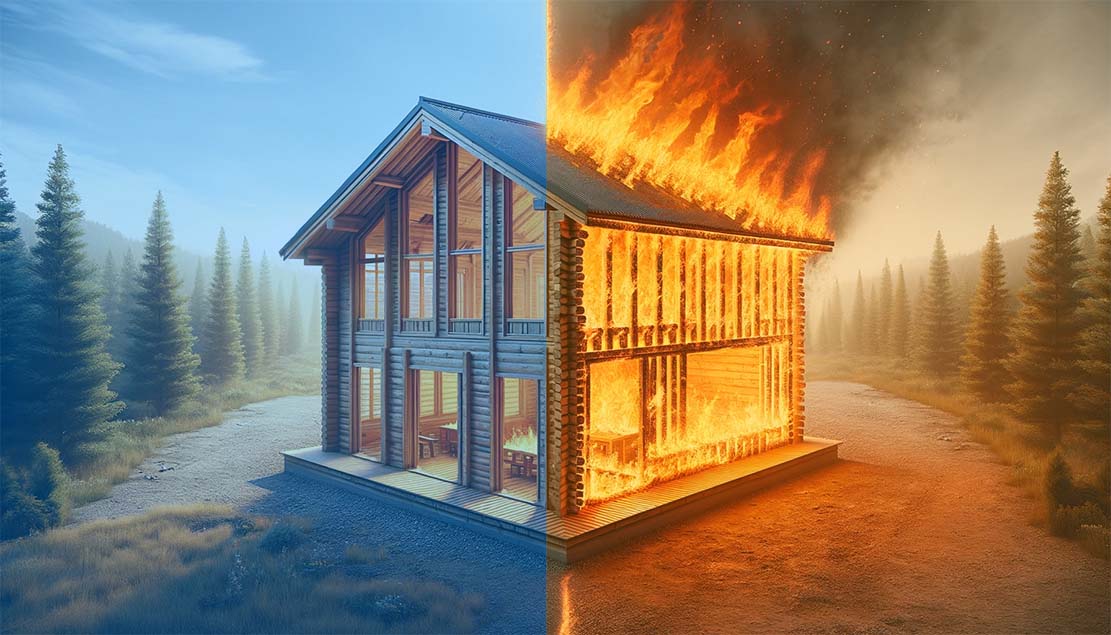
Within this context, fire rated cladding has become increasingly relevant. These systems are designed not to eliminate risk entirely, an unrealistic expectation, but to manage it responsibly. By reducing heat release and slowing flame propagation, they contribute to safer evacuation strategies and provide additional time during critical moments.
Designers are now challenged to integrate safety requirements without allowing them to dominate architectural expression. This balance can be difficult to achieve. Materials that satisfy technical criteria often risk feeling heavy or restrictive. Treated timber cladding offers a way to retain warmth and texture while still meeting performance expectations, allowing buildings to remain approachable rather than overtly defensive.
Execution on site remains a decisive factor. Even the most rigorously tested materials can underperform if installation is careless. Fixings, junctions, interfaces, and ventilation gaps all influence how systems behave under stress. Fire safety is not delivered through specification alone. It emerges from the combined effect of design intent, product selection, and disciplined workmanship.
There is also a longer‑term dimension that increasingly influences specification decisions. Fire performance is not only about achieving compliance at handover. It is about maintaining predictable behaviour throughout a building’s lifespan. Systems that rely on frequent retreatment or surface renewal introduce uncertainty over time. Fire treated timber solutions are typically designed to retain performance characteristics without constant intervention, supporting more robust lifecycle planning.
In complex developments, material choices are rarely assessed by a single party. Engineers, building control officers, insurers, and clients all bring different priorities to the discussion. Clear certification and well‑documented performance data help align these perspectives, reducing friction and improving confidence across the project team.
Alongside this, demand for fireproof cladding has grown, particularly in projects where additional reassurance is required. While no cladding system can render a building immune to fire, these solutions form part of a layered safety strategy that reflects modern expectations rather than simplistic guarantees.
Interestingly, tighter constraints often lead to more disciplined design outcomes. Knowing that materials must meet strict performance criteria encourages careful detailing and restrained material palettes. Fire safety, rather than limiting creativity, can sharpen it, pushing designers toward solutions that balance expression with responsibility.
As construction continues to evolve, fire performance will remain a central consideration. Timber, when treated, detailed, and specified correctly, retains a legitimate role within this landscape. It offers a rare balance between technical compliance and architectural warmth, bridging the gap between regulation and human experience.
Ultimately, fire safety is not a single requirement to be checked off and forgotten. It is an ongoing consideration that shapes how buildings are conceived, assembled, and inhabited. When approached with clarity and care, it becomes part of good design practice rather than an obstacle to it.











© 2025 DM Team All Rights Reserved