




























1. Introduction: Why Talent Intelligence Matters
Traditional hiring methods are no longer reliable and relevant in today’s rapidly evolving corporate industry, and more importantly they are not able to fulfill company needs of what they expect from an employee while onboarding them. Taking personal interviews, checking up prior experience and thorough screening of resumes don’t provide a full picture of the candidate’s potential nor do they show any shortcomings if any. The main objective of companies is to hire individuals who possess required skills and abilities that can enhance the workforce and increase productivity.
Given the presence of a highly competitive talent market, the urgency of talent intelligence is on high, and will increase with time. Companies and organizations who are utilizing data to analyze candidates’ behavioral patterns, their skill set, skill gaps and predict future performance in a workplace, will possess significant advantages over others, and will be able to build a future proof, talented workforce.
By the end of this blog, the reader will be able to understand the concept, the need, real world applications, challenges and future possibilities of talent intelligence.
2. What is Talent Intelligence?
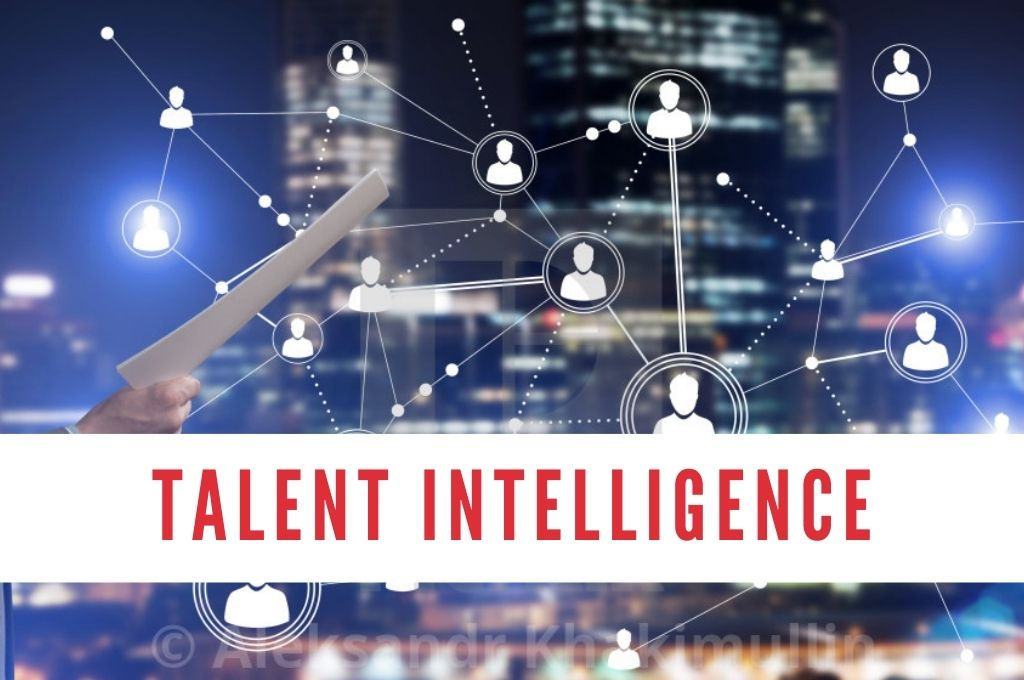
Collecting, analyzing, applying information of working professionals, and turning that raw data into actional insights is a process known as Talent Intelligence. If integrated properly in the hiring process, this method of combining technology and human intuition, will hugely benefit companies by assisting them in making data driven and overall better hiring decisions, improving retention and enhancing development.
In order to understand the concept behind Talent Intelligence, It’s important to understand the three core pillars of Talent Intelligence.
- Data Collection Data collection is a process of gathering insightful data about a candidate’s performance or skill set, or behavioural, through assessment tests, reviews, training records and surveys, The idea is to build a comprehensive dataset that covers all the important knowledge about a candidate’s talents careers routes and behavior.
- Analytics and Insights In order to identify trends, predict outcomes, anticipate opportunities and potential risks, Talent Intelligence weaponizes Artificial Intelligence, machine learning and predictive modeling. By performing thorough analysis, employees can predict which candidate will likely perform better in the workplace, and be able to adapt with challenges coming their way.
- Actionable Strategy All the insights gathered through talent intelligence is used in designing HR strategy, ultimately seeking out high potential employees, performing any change required in the hiring process.
This approach towards hiring, known as Talent Intelligence utilizes relevant data, which efficiently enables proactive, evidence based decision making, unlike traditional hiring methods which are based on intuition and resumes.
3. Key Components of Talent Intelligence
In order to optimize and perform effective talent intelligence, companies and organizations need to rely on multiple key components to provide a complete view of the workforce.
1. Talent Analytics It’s important for companies to perform thorough workforce analytics, in order to track employee engagement, identify top performers, and evaluate potential remaining employees. HR teams can gather valuable metrics like productivity, team work and innovation scores which will be extremely helpful in enhancing management.
2. Predictive Hiring By performing predictive hiring, by utilizing AI and predictive models, employers can reduce the possibility of hiring the wrong person and improve retention. They can accomplish this task by using prior recruiting data, assessing characteristics of candidates, and performance results to determine how the candidate will perform in the workplace after hiring.
3. Skills Gap Analysis It’s really important to identify and understand candidate’s or employee skill gaps, in order to upskill them. Talent intelligence will be an amazing way for companies and organizations to identify skill gaps. By the help of talent intelligence, HR teams can easily understand what kind of development strategies they have to plan out, or reskilling programs they need to introduce in the workplace.
4. Market Insights In order to make the right hiring decisions, it becomes essential for an employer to first understand market insights, about the job role, like developing opportunities, benchmark salary, blockers and overall hiring trends. Being fully and well informed about these things can help the hiring team make better hiring decisions.
5. Workforce Planning Companies and organizations can utilize talent intelligence to strategically plan workforce, It will help them maximize team configuration and understand needs of the workforce.
4. Technologies Driving Talent Intelligence
Talent Intelligence is highly dependent on cutting edge technology, because it requires gathering, examination and presenting of workforce data.
- Artificial Intelligence (AI) and Machine Learning (ML) Talent Intelligence harnesses Artificial Intelligence(AI) and Machine Learning (ML) in order to perform predictive analytics, identify skill gaps, search for patterns, and attrition. With time, as more data gets collected it the output becomes more and more accurate, helping in retention, increases engagement and upskilling.
- HR Analytics Platforms A centralized platform like a dashboard gathers all the important, insightful and valuable data from other platforms like ATS, learning platforms, management tools, and HRIS, in order to produce a unified view of the candidate.
- Predictive Modeling Hiring team performing predictive analysis, assisting HR department in the planning for development strategies, and policies, by forecasting future skill requirements and employee attrition.
- Data Visualization Tools HR departments find dashboard, heatmaps and visual reports extremely helpful in order to monitor key performance indicators.
- Talent Market Intelligence Tools Companies can also utilize outside solutions that provide real-time data on fresh talents pools, skill availability and recruiting trends like LinkedIn Talent Insights.
5. Challenges in Implementing Talent Intelligence
There is no doubt about the fact the Talent Intelligence is nothing but revolutionary change in the hiring industry, but its not invincible to challenges and issues which hold back companies to fully utilize it:
- Data Privacy and Security Companies and organizations should ensure that GDPR and additional privacy regulations are being strictly followed, while managing confidential employee information.
- Data Integration Many businesses might find it difficult to collect data from multiple performance tools like ATS, HRIS and pre-employment assessment tools.
- Change Management Companies will have to invest in resources, in order to train their hiring team, to ensure that they are able to interpret important insights and apply them properly, ensuring accurate data driven hiring decisions.
- Cost and Resources Many companies and organizations might not be able to afford this process, because it involves a lot of technological investment.
6. Future of Talent Intelligence
As it is getting more common, how constant development changes the way companies and organizations treat their employees, Talent Intelligence holds a promising future:
- Predictive Workforce Planning By utilizing artificial intelligence in performing predictive analysis, companies and organizations will be able to find a candidate who is likely to perform better than others, and identify skill gaps, in order to upskill them for the future.
- Integration with Assessment Tools Incorporating IT and AI-driven tools in the hiring process, makes the hiring more efficient and accurate. It also helps companies gather candidate data, which can be used in further development and predictive analysis.
- Personalized Learning and Development Insights driven by AI, will provide employees with personalized learning processes, which will help them in professional progression, self development and increase engagement in the workplace.
- Real-Time Talent Analytics If a company is incorporating Talent Intelligence in their overall HR strategy, which involves continuous observation of labor changes will make HR proactive and agile.
7. Conclusion
Talent Intelligence is being proven to bring a paradigm shift in the hiring practices, It’s changing the way companies and organizations look at hiring. It’s changing the way companies and organizations are hiring, retaining and upskilling employees. Talent Intelligence is ensuring that companies and organizations are making better hiring decisions by utilizing data, AI and predictive analysis.
Talent Intelligence is turning out to be crucial for modern HR strategy, due to its long term benefits, despite the challenges it holds like privacy, investment and data integration. Companies and organizations gain a competitive edge over others by utilizing talent intelligence in order to identify high potential workers and develop future plans.
In totality, Talent Intelligence is the next big thing in human resources, ensuring companies are making data driven hiring decisions, providing them competitive edge and optimizing employee potential.