































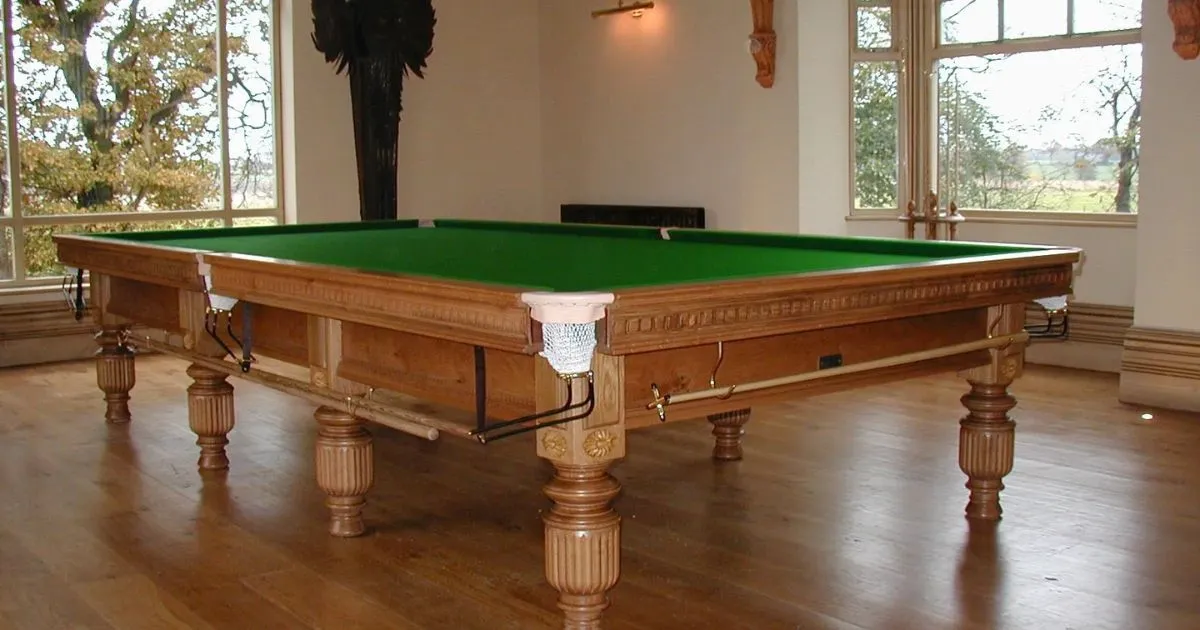
The game of billiards, which later evolved into pool, has a long and fascinating history that stretches back several centuries. What began as a lawn game similar to croquet in 15th-century Europe eventually moved indoors and onto a table. By the late 1400s, people in France and England were playing a table version of the outdoor stick-and-ball pastime, using cues and balls on a green surface meant to simulate grass.
Early tables were often made from solid wood, and the playing surface was covered with a basic fabric to allow the balls to roll smoothly. This marked the birth of what we now recognize as the pool table. Over time, improvements in craftsmanship, materials, and technology would completely transform the table’s design, leading to the sophisticated versions we see today. One of the most notable advancements in this evolution came through the development of high-quality playing surfaces, such as Gorina pool table cloth, which modern players rely on for consistency and precision.
From Royal Courts to Public Halls
In its early years, billiards was a game of the elite. Kings, nobles, and aristocrats across Europe were among the first enthusiasts. Historical records show that figures like King Louis XI of France and later Mary, Queen of Scots, had billiard tables in their palaces. These early tables were handcrafted works of art — expensive, ornate, and exclusive.
As the centuries passed, the Industrial Revolution changed everything. The production of billiard tables became more efficient, allowing them to reach public billiard halls and middle-class homes. The sport moved from royal courts to taverns and clubs, becoming a popular social pastime. With this wider popularity came a greater demand for quality materials. Manufacturers sought better woods, stronger slates, and smoother fabrics, leading to innovations like the Gorina pool table cloth, which became renowned for its superior texture and performance.
Technological Advancements in Design
The biggest leap in pool table evolution came in the 19th century with the introduction of slate beds. Wooden surfaces, while common earlier, tended to warp and distort with humidity. Slate, on the other hand, provided a perfectly level and durable playing field. Around the same time, rubber cushions replaced stuffed cloth or leather edges, making gameplay faster and more predictable.
By the early 20th century, pool tables had become standardized in size and design. Professional tournaments began to emerge, and manufacturers competed to create tables that met the demands of serious players. The surface fabric — or “cloth” — became a defining factor in performance. Players discovered that smoother, tightly woven materials improved accuracy and ball control. It’s in this context that Gorina pool table cloth earned its reputation. Crafted with precision and high-quality wool blends, it allowed for consistent ball movement and optimal friction, becoming a preferred choice among professionals and billiard clubs worldwide.
The Role of Cloth in the Modern Game
Today, the pool table’s surface is more than just a covering — it’s a performance component. The speed, accuracy, and feel of every shot depend on it. Gorina pool table cloth is an example of how far this aspect of design has evolved. Manufactured in Spain, Gorina’s cloth is used in top-level tournaments and is known for its resilience, fine weave, and smooth texture.
Unlike generic fabrics, Gorina pool table cloth undergoes strict quality control to ensure even tension and durability. It reduces pilling, resists wear, and maintains consistent play over thousands of games. In professional and recreational settings alike, players value how it maintains speed without sacrificing control. This level of innovation connects directly back to billiards’ earliest goal — to replicate the feeling of outdoor play indoors, but now perfected through technology and craftsmanship.
Evolution of Aesthetics and Purpose
While early pool tables were often decorative pieces reflecting luxury and status, modern tables focus on a blend of performance and design. Sleek finishes, precision engineering, and customizable options have made pool tables both functional and stylish. Many contemporary tables use sustainable materials and advanced manufacturing techniques to balance tradition with modern design sensibilities.
However, one aspect remains constant: the importance of the playing surface. Whether in private game rooms, professional arenas, or bar settings, the feel of the table defines the experience. The continued use of Gorina pool table cloth on premium tables highlights how craftsmanship has stayed at the heart of the game’s evolution. From the texture under the cue to the smooth roll of the ball, this cloth connects modern players to the centuries-old pursuit of perfection.
From Past to Present: A Legacy of Innovation
The pool table’s journey — from royal lawns to living rooms, from hand-carved wood to precision-machined slate — is a story of continuous innovation. Yet, the essence of the game remains the same: skill, strategy, and the joy of play. Modern pool tables represent the culmination of hundreds of years of refinement, with materials like Gorina pool table cloth embodying that progress.
As technology continues to advance, manufacturers explore ways to make tables even more durable, sustainable, and high-performing. Yet even with all these innovations, the spirit of billiards remains rooted in its history. Every shot played on a modern table — especially one covered in Gorina pool table cloth — carries with it echoes of the past, from medieval lawns to smoky billiard halls, linking generations of players across time.
Conclusion
The evolution of pool tables tells a broader story: how tradition and innovation can coexist. The timeless appeal of the game continues to thrive, and thanks to advancements in materials like Gorina pool table cloth, the experience has never been smoother, faster, or more enjoyable for players around the world.